Leytonstone House Clearance in Leytonstone

We provide house clearance in Leytonstone for customers who need a clear, organised way to remove unwanted household items from a property. That can include a full clearance, a partial clearance, or help with selected rooms, furniture and general contents when you want the work handled properly and with as little disruption as possible. Our approach is straightforward: remove what has been agreed, keep the work tidy, and leave the property ready for its next step.
If you are comparing options, it helps to think about the type of space first. A family house, a rented flat and an inherited property can each need a slightly different clearance plan. We can help with practical removals from living rooms, bedrooms, loft spaces, kitchens, garages and other domestic areas, with the emphasis on sensible sorting rather than rushed emptying. We aim to make the process manageable by separating reusable items, recyclable materials and general waste where this is appropriate.
The work is often about more than simply lifting items out of a room. Access, stairways, heavy furniture, awkward corners and mixed contents all affect how a clearance is organised. If you want to reduce the clutter without upsetting the rest of the property, we can structure the job around the rooms or items you want to keep. For a quotation, you can start by listing the areas involved and the main items that need removing.
Household clearance for full and partial jobs
A house clearance does not have to mean emptying every room in one go. Some customers only need specific items removed, while others want a larger clearance after a move, refurbishment, bereavement or long-term accumulation of belongings. We handle both approaches, and the plan is shaped by what is staying, what is going, and which parts of the property need the most careful attention. That flexibility matters when the property still contains everyday fixtures and personal possessions.
In practical terms, a good clearance should respect the layout of the home. Heavy wardrobes, broken appliances, boxed items, loose bagged waste and smaller household objects often need different handling. We work through these in a logical order so that the property is cleared without unnecessary backtracking. If you are not sure whether a full or partial clearance is the better fit, it is usually best to identify the rooms involved and the broad type of contents before requesting a price.
Rooms and contents commonly included
Many domestic clearances involve a mixture of furniture and everyday items. Typical examples include sofas, tables, chairs, shelving, mattresses, white goods, clothing, books, ornaments, boxed belongings and general rubbish that has built up over time. We also clear lofts, garages and underused storage spaces, provided the contents have been described clearly. Where there are items that should be set aside, it is useful to mark them before the visit so the clearance stays organised.
Furniture removal, disposal and reuse choices

Furniture often makes up the largest part of a house clearance, and it can also be the hardest part to plan around. Some pieces may still be suitable for reuse, while others are no longer safe or practical to keep. We remove a wide range of household furniture and can separate items for disposal, recycling or onward handling where appropriate. This is helpful when a room needs to be cleared but you still want to keep the process sensible and orderly.
Items such as wardrobes, chests of drawers, beds, sofas, tables and cabinets can present different challenges because of size, weight and condition. Where furniture must be dismantled to move it safely, the work should be done carefully rather than forced through tight spaces. Our service is designed to deal with that practical side of the job, helping you clear space without leaving the rest of the property disorganised. If you have mixed furniture across several rooms, it is worth grouping the main pieces in your enquiry.
For some customers, the main decision is whether a piece should be kept, removed for disposal or passed into a more suitable recovery route. We cannot promise every item will be reusable, but we can explain the likely handling once the items are described. That kind of clear separation is often the difference between a neat clearance and a rushed one. Clear instructions at the start usually lead to a smoother job.
Clearances for lofts, garages and storage spaces
Lofts and garages tend to collect the widest variety of possessions, from old furniture and boxes to suitcases, tools, decorations, sports equipment and household leftovers. These areas often need a slightly different approach because access may be narrower, the contents may be stacked more tightly, and the items may have been stored for years. We clear these spaces as part of a house clearance or as stand-alone jobs where only the storage area needs attention.
A successful loft or garage clearance usually depends on sorting the space before heavy lifting begins. Fragile or valuable items should be identified, and anything that must stay in place needs to be separated from the clearance pile. In some properties, the challenge is simply getting items down stairs or through a side entrance safely. In others, the main issue is the sheer volume of accumulated things. Either way, a measured approach is better than trying to rush the work.
Useful details for this kind of clearance include access points, whether the loft has a fixed ladder or boarded floor, and whether the garage contains loose storage, shelving or large tools. You do not need to over-explain every object, but a short description of the main categories is usually enough to prepare an accurate quotation. Good preparation here is mainly about clarity, not effort.
How we organise a domestic clearance
Domestic clearance work tends to go more smoothly when the scope is defined early. A quotation is usually easier to prepare when the property type, room count and main contents are described clearly. If you are asking for help with a house, flat or multi-room home, it helps to note whether the job is a full clearance, a partial clearance or a room-by-room task. That gives us a practical basis for planning the work and setting expectations around time and access.
There are also a few simple things customers often find useful before the work begins.
- Identify anything that must stay in the property.
- Separate personal documents, jewellery or other small valuables.
- Make access points clear for larger items if possible.
- Tell us about stairs, narrow hallways or parking restrictions.
For many properties, the best result comes from a measured clearance rather than a blanket approach. We can remove items systematically, leaving the property ready for cleaning, sale, re-letting, refurbishment or family handover. If you want to request a quotation, a short message listing the main rooms and the kind of items involved is usually a good place to begin.
House clearance for different property types

Not every home presents the same clearance pattern. A traditional house may contain several floors and a mix of loft storage, furniture and general contents, while a flat may be more compact but still involve stairs, lifts, narrow access or shared entrances. We adapt the work to the property type rather than forcing the same method everywhere, because the safest and cleanest result depends on the layout as much as the volume of items.
In some cases, the work is focused on a few substantial items; in others, the property has to be worked through room by room. That may include furniture, boxed contents, kitchen items, textiles, books, ornaments and assorted household waste. When there are many different item types, it helps to think about the clearance in categories rather than as a single pile. A more organised job is usually easier to complete and easier for you to review afterwards.
We can also help when the property needs to be cleared in stages. That can be useful when decisions are still being made about what to keep, or when rooms need to be emptied in a specific order. Staged work is not the same as delay; it is simply a practical way to handle a property that contains a lot of mixed contents. Careful sequencing is often what keeps the clearance manageable.
About Leytonstone
Leytonstone is a district in east London within the London Borough of Waltham Forest, sitting close to the edge of Epping Forest and forming part of the long corridor of settlements that developed along the former Lea Valley and the routes east from the city. Its name is associated with an old milestone on the Roman road now broadly followed by the A12, and the area retains a sense of being both a through-route and a settled urban neighbourhood. The district grew significantly in the nineteenth century as rail links improved access to central London, and much of its housing reflects that period of suburban expansion, with terraces, mansion blocks and later interwar development adding to the street pattern. Alongside everyday residential streets, Leytonstone has local landmarks and civic features that give it a distinctive identity, including the memorial to filmmaker Alfred Hitchcock, who was born nearby and is commemorated in the area. The district also benefits from access to green space, with nearby connections to Wanstead Flats, Hollow Ponds and the wider edge of Epping Forest providing a contrast to the busier roads and local shopping parades. Central Leytonstone has a strong local high street character, with shops, cafes and community facilities serving the surrounding neighbourhoods, while the network of roads and Underground links keeps it closely connected to the rest of east London. The result is a place that combines residential continuity, historic layers and practical city convenience in a compact and recognisable urban setting.
Clearance for furniture, appliances and mixed contents
House clearances often involve more than standard furniture removal. Many homes contain a mixture of appliances, soft furnishings, boxed possessions, breakables and household waste, all of which may need to be handled differently. We can manage those mixed contents as part of a single clearance so that you do not have to arrange separate removal for every category. This keeps the process more coherent, especially where rooms contain a combination of usable items and materials that are only fit for disposal.
Appliances and larger household items can require a bit more care because of size, weight and connection points. Furniture may need to be moved around stairs, door frames or tight hallways, while smaller contents often need sorting into groups before removal. That is one reason why a clear description of the property is useful when requesting a quotation. The more accurately the main item types are described, the easier it is to plan a sensible clearance that matches the property.
If you are comparing different kinds of removal work, it may help to think in terms of the end result you need. Some jobs are primarily about freeing a room for use again, while others are about emptying a property for handover, refurbishment or sale. Our aim is to carry out the agreed clearance carefully and leave the space ready for whatever happens next. pricing and quotes
Practical sorting, recycling and responsible handling
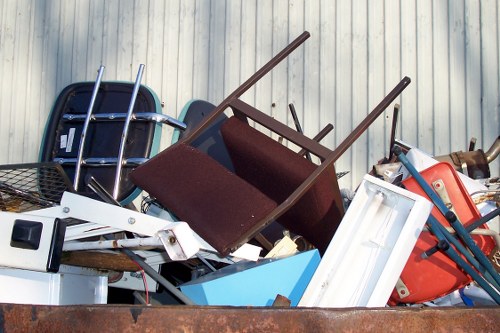
A well-run house clearance does not treat every item in exactly the same way. Where items can be separated for recycling or other appropriate handling, that should be considered as part of the process. We work with the practical reality of mixed domestic contents: some things are fit for re-use, some need disposal, and some are best dealt with as recyclable material or general waste. That distinction helps keep the job organised and avoids needless duplication of effort.
This is especially relevant in homes where the contents have built up over time. Old paperwork, broken storage boxes, worn-out furniture, textiles and small electrical items may all be present in the same room. Rather than treating them as one undifferentiated pile, it is better to approach them as separate categories. Customers do not need to catalogue every object, but a broad idea of what is present makes the work easier to manage and the quotation easier to understand.
For customers who want a clearer overview of how different jobs are handled, our recycling and sustainability page sets out the general approach we use when sorting materials. It can be useful alongside a clearance enquiry because it explains how the practical handling of items fits into the wider service, without changing the main point of the job: removing the agreed contents from the property in an orderly way.
Preparing for a quotation and next steps
If you are ready to request a quotation, a short and accurate description is usually enough to begin. The most useful details are the property type, the number of rooms or areas involved, the main item categories, and any access issues such as stairs, narrow hallways or limited parking. Photographs can help when a space is full or the contents are mixed, but a written summary still matters because it explains what the images may not show. That combination gives a clearer picture of the work.
We recommend keeping the enquiry focused on the clearance itself rather than trying to solve every detail in advance. If you know what should remain in the property, mention that clearly; if there are items that need special handling, note them separately; and if the job is time-sensitive because of a move, sale or handover, say so in plain terms. A few precise points are often more valuable than a long general explanation. Simple information tends to produce a better quotation.
When you are ready, you can request a quotation and tell us what needs clearing, and we will help with the next step. If you want to compare services first, take a look at our house clearance page and then get in touch through the contact route that suits you best.
Other clearance services we can help with

Some customers need one main house clearance; others have several areas that need attention at different times. That is why we also offer related clearance services for flats, lofts, garages, gardens, furniture and office contents, each suited to a different kind of space. The right choice depends on what is being removed and how the area is used. A single room full of stored furniture may be better treated differently from a whole property with mixed domestic contents.
Where a property includes outdoor storage, workspaces or older furniture, it can be useful to separate the job into logical parts rather than trying to handle every item in one broad sweep. For example, a loft may need careful access planning, a garage may contain a mixture of boxes and tools, and a set of old chairs or wardrobes may be easiest to deal with through a furniture-specific clearance. Choosing the right service makes the quotation more accurate and the work more straightforward.
If your project involves a narrower space, a single category of contents or a different property type, the related pages below may help you decide what to ask for next: flat clearance, loft clearance, garage clearance, furniture clearance, office clearance and contact us. Use the option that best matches the work you need, then request a quotation with the main details of the job.